What Is the Average Cost of Lead Generation for Landscapers in Australia? (2026 Cost Per Lead, Channel by Channel)

Key Takeaways There is no single average, and quoting one is the fastest way to budget wrong. A maintenance enquiry and a full backyard design-and-construct enquiry are both "a landscaping lead", but they sit at opposite ends of the cost scale because one is worth a few hundred dollars a year and the other is worth tens of thousands in a single job. Marketplace leads look cheapest per lead and are usually the most expensive per won job. A shared enquiry sold to three or four landscapers at once converts at a fraction of the rate of an exclusive enquiry, so the low per-lead price is offset by the number you have to buy before one becomes work. Google Ads sits in the middle on price and at the top on speed. It is the only channel that can produce enquiries in week one, which makes it the right tool for filling a gap in the schedule...

Read More
RankBurn vs LocaliQ for Tradies in Melbourne (2026): Which One Actually Keeps the Ute Booked?

RankBurn vs LocaliQ for Tradies in Melbourne (2026): Which One Actually Keeps the Ute Booked?

Key Takeaways LocaliQ sells managed media; RankBurn builds published assets. LocaliQ is Gannett's local marketing arm — the business that absorbed ReachLocal and later WordStream — running ads, listings and websites on your behalf. RankBurn produces organic and AI visibility you keep. The choice is whether the phone rings because you are paying this month, or because something you published is still ranking. Ownership is the clause most tradies skip. Before signing any managed bundle, establish in writing who owns the website, the landing pages, the Google Ads account, the call-tracking numbers and the lead history if you leave. A trade that has to rebuild its web presence from scratch at cancellation was renting, not investing. Melbourne is forty small markets, not one city. Nobody in Pakenham searches "plumber Melbourne." Each suburb has its own map pack, its own incumbent and its own cost per click — a fragmentation that makes paid management expensive and makes organic publishing cheap per page won. A bid...
Read More
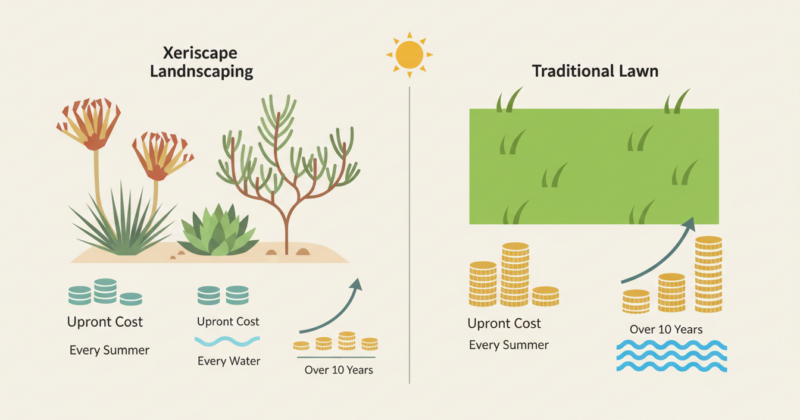
Xeriscape Landscaping vs Traditional Lawn Cost in Perth (2026): What You Pay Upfront, Every Summer and Over 10 Years

Xeriscape Landscaping vs Traditional Lawn Cost in Perth (2026): What You Pay Upfront, Every Summer and Over 10 Years

Key Takeaways A lawn usually costs less to put in. A xeriscape usually costs less to keep. Which one is cheaper depends on how many years you plan to keep the garden, not on the first quote. Garden watering sits on top of your indoor use, so in Perth it's charged at your highest tier. At Water Corporation's 2026-27 prices that's $2.809/kL in Tier 2 and $5.256/kL once you pass 500 kL in a year, which makes a thirsty summer lawn more expensive than it first looks. Perth's two-day sprinkler roster and the 1 June to 31 August winter switch-off apply to both options. Lawns feel those limits far more, because turf on Swan Coastal Plain sand dries out quickly between watering days. A well-built xeriscape is not maintenance-free. Mulch needs topping up, plants need pruning and drip lines need checking. What disappears is the weekly mow, regular fertilising, and most of the summer water bill. Most Perth yards end up with a hybrid: a...
Read More
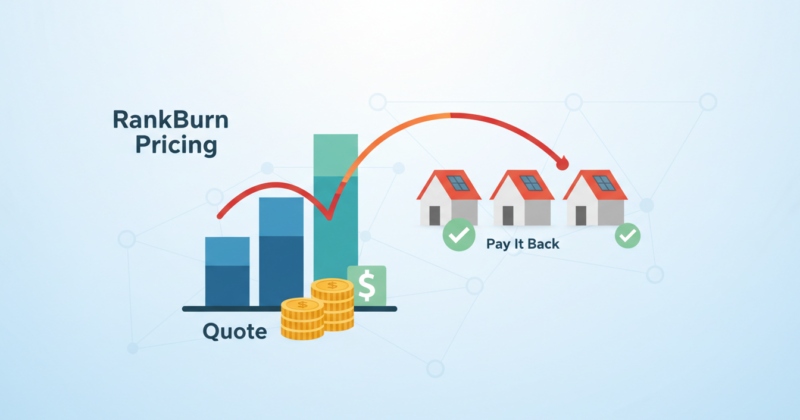
RankBurn Pricing for Roofing Contractor Marketing (2026): What Sets the Quote and How Many Roofs Pay It Back

RankBurn Pricing for Roofing Contractor Marketing (2026): What Sets the Quote and How Many Roofs Pay It Back

Key Takeaways RankBurn does not publish a price list. Roofing contractors are quoted a flat monthly figure against an agreed scope: service area, job types targeted, and publishing volume. The strategy call is where that number gets produced. Roofing is a high-ticket, low-frequency trade, so the right yardstick is cost per won roof measured over a quarter or a year. Cost per lead and month-one results both mislead in this trade. Four things move a roofer's quote the most: how many towns or suburbs are targeted, whether the goal is repairs or full replacements, how much storm and insurance work is in the mix, and the state of the existing website and Google Business Profile. The payback table in this article shows why job mix matters more than price. A marketing spend that needs several repair callouts a month to break even can be covered for a full quarter by one replacement job. The deciding...
Read More
Best Landscaping Software for Small Business in Australia (2026): Side-by-Side Comparison

Best Landscaping Software for Small Business in Australia (2026): Side-by-Side Comparison

Key Takeaways There is no single "best" landscaping software — there are three distinct business types. A fortnightly mow round, a residential design-build firm and a commercial maintenance contractor need almost nothing in common, and buying the wrong category is the most expensive mistake in this market. Mow rounds and maintenance routes are won on recurring scheduling and route sequencing. Jobber and ServiceM8 are the realistic shortlist; feature depth beyond scheduling is mostly wasted spend. Design-build landscapers need a quoting and proposal layer more than a dispatch layer, plus a separate visualisation tool — the job platform and the design software are two different purchases, and almost nobody sells both well. Australian-built matters more than the feature list. Xero and MYOB sync, GST-correct invoicing, AEST support hours and local BAS handling separate ServiceM8, Tradify, Fergus and AroFlo from US-first products billed in USD. Adoption, not capability, decides the outcome. The platform your least tech-confident crew member will open on a wet Tuesday beats the one...
Read More
Cost of Solar Panel Installation vs Traditional Electricity in Sydney (2026): The Real Break-Even Math

Cost of Solar Panel Installation vs Traditional Electricity in Sydney (2026): The Real Break-Even Math

Key Takeaways This is not a price-vs-price comparison. Solar is a one-off capital cost with a known ceiling; grid electricity is an open-ended operating cost with no ceiling at all — the comparison only makes sense over a multi-year horizon. Sydney sits in STC Zone 3, and the federal small-scale certificate rebate is already discounted off the quotes you receive. That rebate steps down each year until the scheme ends in 2030, so a system costs slightly more in real terms every year you wait. Self-consumption — not system size — drives the payback period. Every kilowatt-hour you use at home avoids a retail rate of roughly 30–45c; every kilowatt-hour you export earns a feed-in tariff that has collapsed to a few cents. The same hardware can pay back in under three years or over seven depending purely on when the household uses power. For a well-oriented Sydney roof on a daytime-usage household, a 6.6 kW system quoted in the mid single-digit thousands typically...
Read More

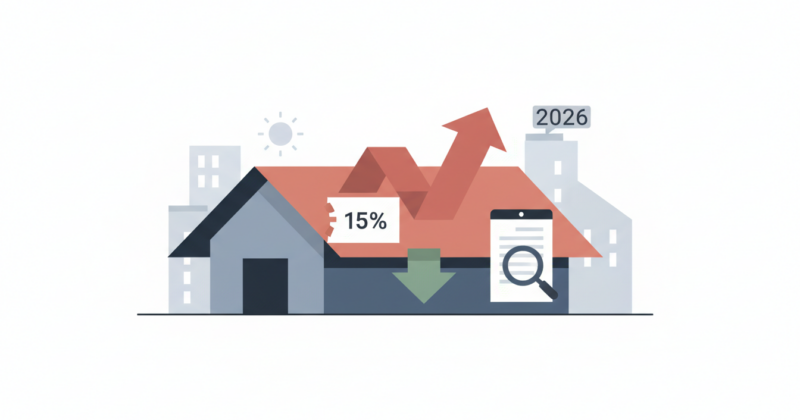
Do Perth Homeowners Really Overpay for Roofing by 15% a Year? What the Report Claim Leaves Out (2026)

Key Takeaways No published study could be found showing that Perth homeowners overpay for roofing by 15% a year. Neither WA's building regulator, Consumer Protection WA nor any national consumer group appears to have produced that number. The word "annually" is the weakest part of the claim. Most households buy major roofing work once every decade or two, so a yearly overpayment rate doesn't describe how roofing is actually bought. Where Perth homeowners do lose money, it's mostly through scope: re-roofing when a restoration would do, restoring when a repair would do, or coating over faults that were never fixed. Perth brings its own cost drivers: concrete tile roofs on double brick homes, salt air near the coast, asbestos cement on older houses, and winter storm fronts that bring out door-knockers. WA's Home Building Contracts Act and home indemnity insurance rules give real protection on bigger jobs, but only if homeowners know to ask for...
Read More
Do Melbourne Homeowners Overpay for Roof Repairs by 15%? What the Claim Misses and How to Check Your Quote (2026)

Do Melbourne Homeowners Overpay for Roof Repairs by 15%? What the Claim Misses and How to Check Your Quote (2026)

Key Takeaways No published report could be found that supports the claim that Melbourne homeowners overpay for roof repairs by 15% a year. The figure circulates without a named source, so it should not be relied on in either direction. Overpaying on a roof is usually not a markup problem. It is a scope problem: paying for a restoration when a repair would do, or paying for work the roof never needed. Quotes for the same roof can legitimately differ because of access, materials, and what each roofer has included. The only fair comparison is line by line against the same scope. Victorian homeowners have specific protections worth knowing: contract and insurance thresholds for larger domestic building work, licensing for roof plumbing, and a cooling-off period for door-to-door sales under Australian Consumer Law. For roofers, the lesson runs the other way. The contractors who explain their pricing in public are the ones homeowners trust when...
Read More
How Much Does RankBurn Cost for Small Business Marketing in Sydney? (2026 Pricing Model, Scope and Payback)

How Much Does RankBurn Cost for Small Business Marketing in Sydney? (2026 Pricing Model, Scope and Payback)

Key Takeaways RankBurn is priced as a flat monthly retainer with no media spend attached. There is no ad budget sitting underneath the invoice, no cost-per-click auction and no separate platform subscription — the number you agree to is the number that leaves the account each month. The price is scoped to publishing volume and service-area size, not to your revenue. A single-location Sydney business covering the Inner West is a different production job to a company servicing the Northern Beaches, the Hills and the Sutherland Shire, and the quote reflects that surface area rather than what your books can bear. There is no public rate card, and that is deliberate. Scope is set after a look at your current visibility, your competitive set and how many suburbs you can profitably reach — which is why pricing is quoted on a call rather than guessed at from a pricing page. The fair comparison is cost per...
Read More
How Much Does SEO Cost for a Small Business in Sydney? (2026 Price Tiers, Hidden Fees and Payback)

How Much Does SEO Cost for a Small Business in Sydney? (2026 Price Tiers, Hidden Fees and Payback)

Key Takeaways Most Sydney small businesses land between roughly $800 and $4,500 a month. Single-location businesses serving a handful of suburbs sit at the lower end, multi-suburb and multi-location operators sit in the middle, and competitive verticals like legal, cosmetic, finance and trades across the whole basin sit at the top. Sub-$600 offers in Sydney are almost always reporting-and-citations services, not ranking programs. Price differences are almost entirely scope differences. A retainer is a block of skilled hours with the provider's margin removed. Once you convert every quote into pages produced, links earned and the metric the provider will be judged on, the $600 quote and the $3,500 quote stop looking like the same product. Setup fees are the most commonly unquoted line item. Technical audit, keyword and suburb mapping, Google Business Profile rebuild and conversion tracking are genuine front-loaded work that sits outside the headline monthly figure — as do call tracking, hosting and any site...
Read More